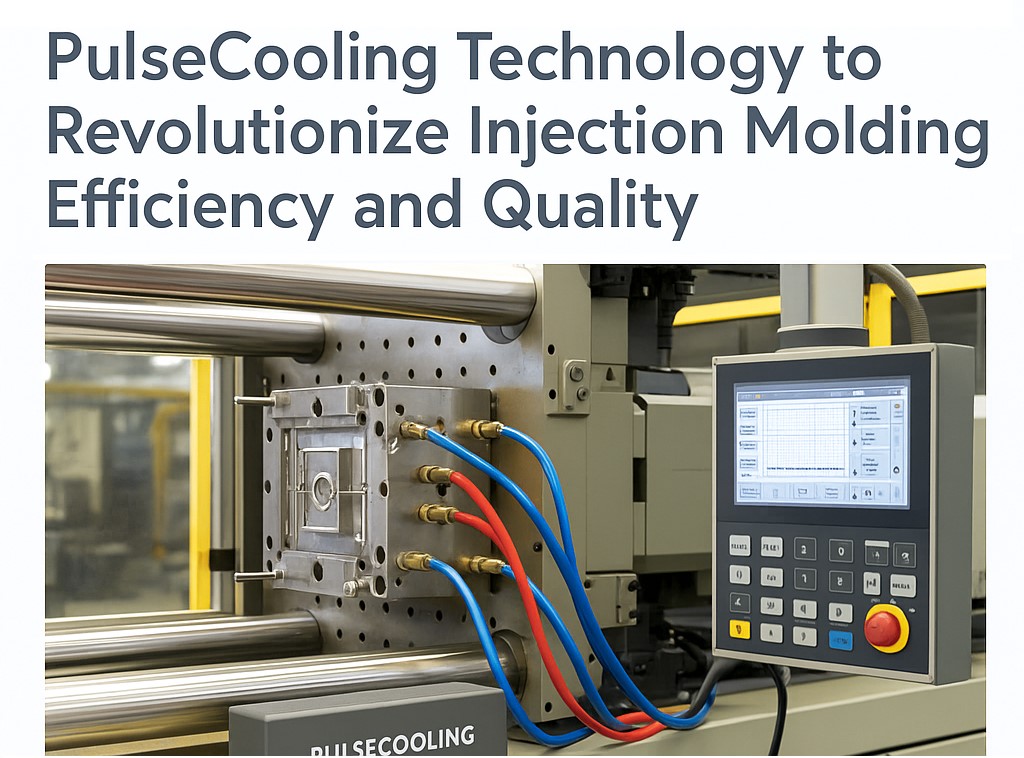
PulseCooling Technology
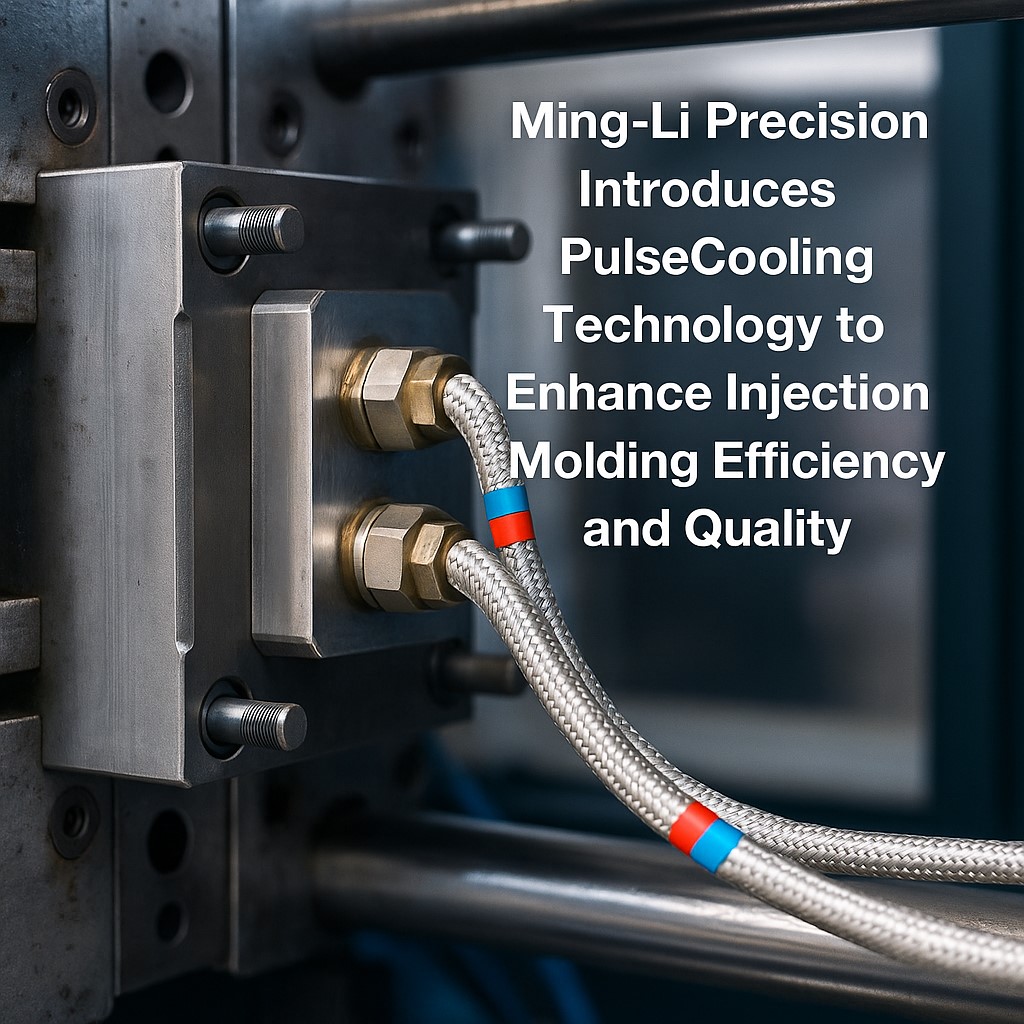
PulseCooling Technology in Injection Molding: Advancing Precision, Efficiency, and Sustainability
1. Introduction
In the world of injection molding, managing heat efficiently is one of the most critical factors for achieving high precision, shorter cycle times, and consistent product quality. Conventional cooling methods rely on a continuous flow of coolant through fixed channels within the mold. While effective to a degree, these systems often lead to thermal inconsistencies, overcooling, or undercooling—ultimately affecting part shrinkage, dimensional stability, and surface finish.
PulseCooling technology represents a revolutionary shift in mold temperature management. Developed by innovators like CITO Products, PulseCooling replaces constant water flow with pulsed bursts of coolant, controlled dynamically based on real-time mold surface temperature measurements. This technology is now gaining traction across multiple industries including automotive, medical devices, electronics, and micro molding.
2. What is PulseCooling Technology?
PulseCooling technology integrates:
-
High-response valves and sensors: Precisely control when and how long coolant enters specific mold channels.
-
Real-time temperature monitoring: Sensors placed directly on the mold surface measure temperature variations during every molding cycle.
-
Advanced control algorithms: The system decides when to initiate a cooling pulse or pause, maintaining an optimal thermal profile.
Unlike traditional methods, where coolant continuously circulates regardless of need, PulseCooling delivers coolant only when necessary—reducing energy use, water consumption, and thermal shock on the mold.
3. Key Technical Advantages
3.1. Precise Mold Temperature Control
The dynamic cooling approach minimizes temperature gradients between different areas of the mold. This is especially critical for complex geometries, thin-walled parts, or multi-cavity tools where uneven cooling can cause warpage, sink marks, or dimensional variability.
3.2. Cycle Time Reduction
Independent studies and industrial trials have demonstrated cycle time reductions of 20–50%. Faster cooling without compromising part quality directly increases production throughput, improving return on investment for mold owners.
3.3. Improved Part Quality and Consistency
Better temperature control reduces internal stresses, improves surface finish, and ensures repeatability—essential for precision gears, connectors, medical housings, and optical components.
3.4. Extended Mold Life
Reducing thermal shock by avoiding unnecessary overcooling or undercooling prevents micro-cracking and excessive wear on molds. This leads to longer tool life and lower maintenance costs.
3.5. Energy and Water Savings
Because coolant flows only when needed, PulseCooling systems can significantly reduce water usage and energy consumption associated with pumping and chilling—supporting sustainability initiatives and lowering operational costs.
4. Applications Across Industries
4.1. Automotive Components
Automotive OEMs demand exceptional precision for connectors, housings, and lightweight structural parts. PulseCooling improves cycle times for multi-cavity molds used in large-scale production, while maintaining tight tolerances required for safety-critical components.
4.2. Medical Device Manufacturing
Medical components such as microfluidic chips, syringe parts, and implants require tight dimensional control and flawless surfaces. PulseCooling minimizes warpage and contamination risk by ensuring consistent cooling conditions—important for meeting ISO 13485 and FDA standards.
4.3. Electronics and Connectors
In electronics, small connectors or micro molding parts often have thin walls and intricate details. Conventional cooling struggles to achieve uniform temperature distribution, whereas PulseCooling maintains optimal conditions for crisp details and dimensional accuracy.
4.4. Micro Molding and Precision Gears
Micro molding demands ultra-stable processing conditions to avoid defects magnified at micro-scale. PulseCooling enables better replication of fine features such as gear teeth and optical lens structures, reducing scrap rates and improving part functionality.
5. Integration with Existing Injection Molding Systems
5.1. Retrofitting Existing Molds
PulseCooling can be installed on many existing molds by adding temperature sensors and integrating the pulse control valves. For older molds, minor modifications to cooling channels may be necessary.
5.2. Control System Compatibility
Modern molding machines can communicate directly with PulseCooling units via standard protocols (e.g., Euromap interfaces), enabling real-time process optimization without extensive operator intervention.
5.3. Process Optimization
The ability to fine-tune pulse timing and duration allows engineers to tailor cooling for specific geometries or materials—reducing hot spots, cycle variability, and improving overall process reliability.
6. Case Studies and Performance Data
While specific case studies are proprietary, multiple industry reports and trials indicate:
-
GE Plastics tests showed improved part consistency and reduced scrap rates when switching from conventional cooling to pulsed cooling.
-
In high-cavitation molds for automotive connectors, cycle time reductions of 30–40% were achieved without compromising dimensional quality.
-
Manufacturers have reported double-digit energy savings and longer mold maintenance intervals, leading to lower total cost of ownership.
7. Sustainability and Environmental Impact
PulseCooling contributes to green manufacturing by:
-
Lowering water consumption and wastewater generation.
-
Reducing power demand on chillers and pumps.
-
Extending mold life, thus reducing tooling waste.
These benefits align with global sustainability goals and help companies meet ISO 14001 environmental standards.
8. Future Outlook
As industries move toward Industry 4.0 and smart manufacturing, PulseCooling is expected to integrate with IoT-enabled systems and AI-driven process monitoring. This will allow predictive maintenance, automatic adjustment of cooling strategies based on real-time part data, and deeper analytics to improve yield and efficiency.
Emerging areas such as electric vehicles, wearable medical devices, and precision optical components will further drive demand for advanced mold cooling technologies like PulseCooling.
9. Conclusion
PulseCooling technology is more than just a cooling method—it is a transformative approach to injection molding process control. By delivering precise temperature management, shorter cycle times, improved product consistency, and environmental benefits, PulseCooling positions manufacturers to compete in demanding global markets.
For mold makers and injection molders focused on high-precision, high-volume production, investing in PulseCooling is a strategic move that pays dividends in quality, efficiency, and sustainability.