Blog
Power Module Technologies — IGBT, SiC, MOSFET, and GaN: Their Characteristics and Housing Design at Ming-Li Precision
1. Introduction
The power electronics industry is undergoing a massive transformation, driven by electrification, renewable energy, and high-efficiency systems.
At the heart of this revolution lie power modules, which serve as the core building blocks for inverters, converters, and motor control systems.
These modules integrate high-power semiconductor devices such as IGBTs, SiC MOSFETs, traditional MOSFETs, and GaN transistors, each offering distinct performance advantages for different voltage, current, and frequency ranges.
However, the semiconductor chip is only part of the system.
A power module can only function reliably when supported by a high-precision housing that ensures electrical insulation, mechanical protection, and effective thermal management.
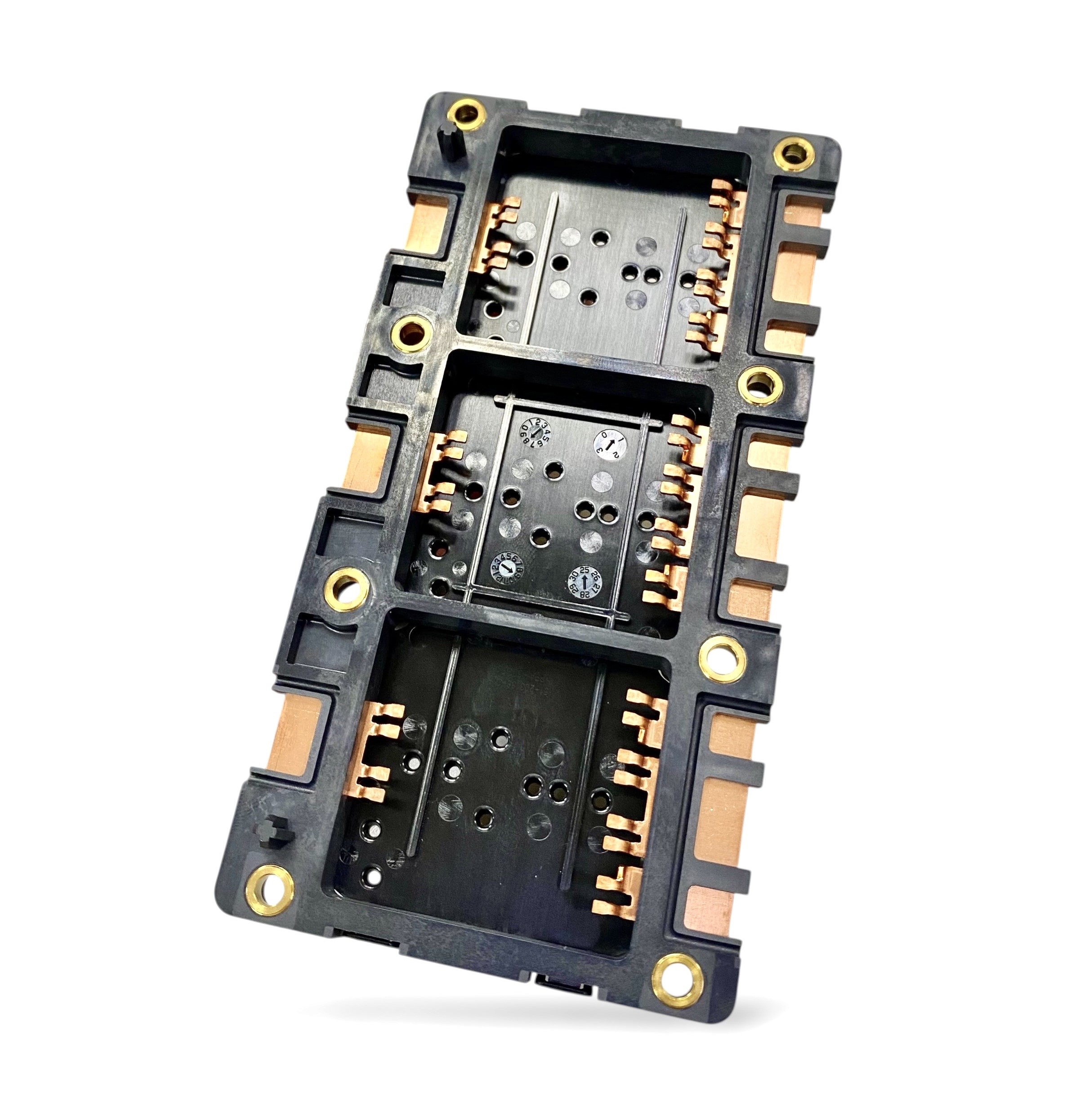
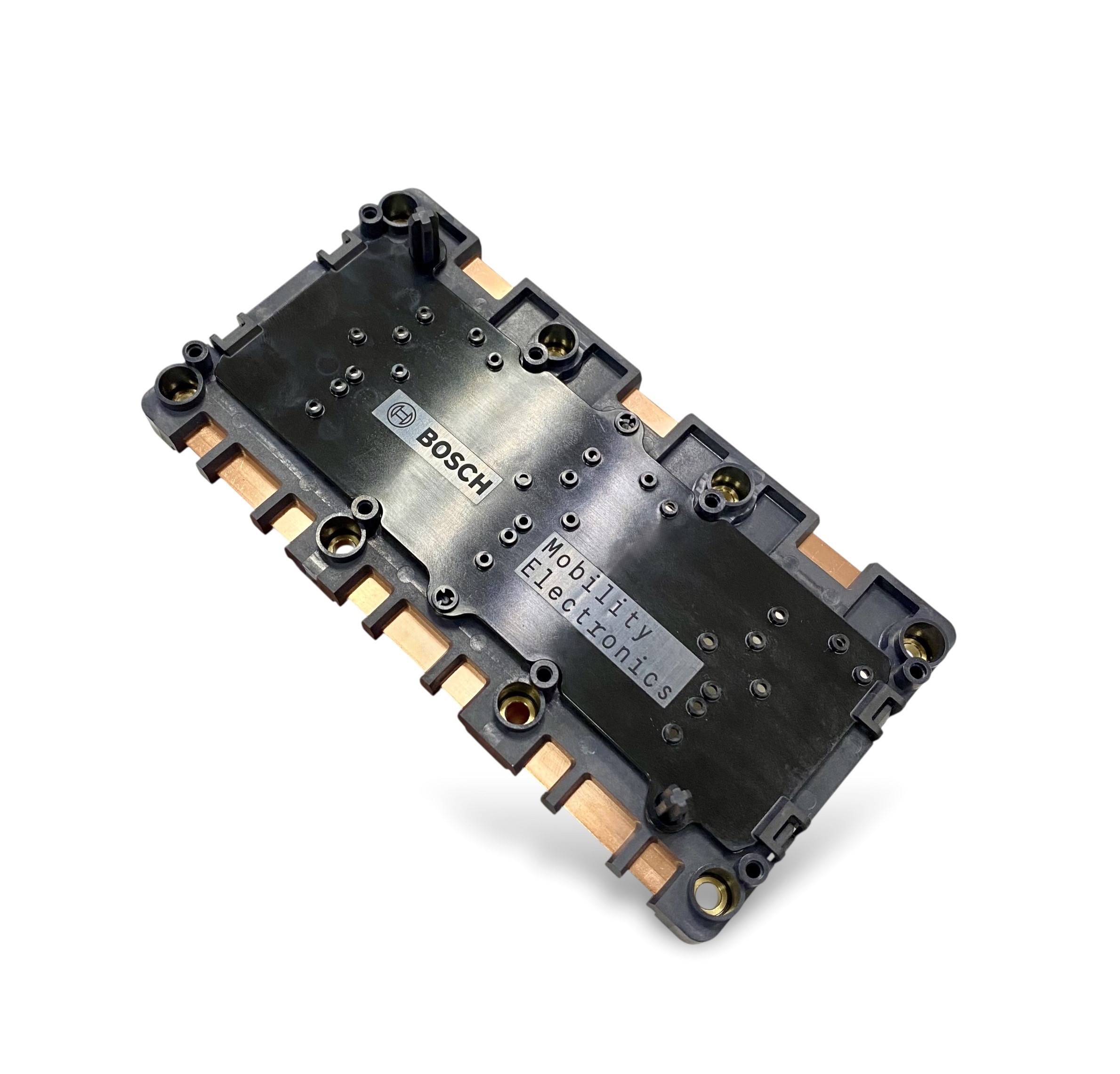
The Power Module Housing — often made from high-temperature engineering plastics, ceramics, or metal-plastic hybrids — directly impacts the module’s durability, manufacturability, and efficiency.
At Ming-Li Precision, we specialize in designing and manufacturing high-accuracy housings for these advanced power modules.
Our deep expertise in precision molding, insert molding, and dimensional control (±1 μm) allows us to deliver world-class solutions for automotive, industrial, and energy applications.
2. Overview of Power Module Technologies
Each type of power module represents a different generation of semiconductor innovation.
The selection between IGBT, SiC, MOSFET, or GaN depends on the required switching speed, voltage, current level, and operating temperature.
| Power Module Type | Full Name | Semiconductor Material | Key Features | Typical Applications |
|---|---|---|---|---|
| IGBT Module | Insulated Gate Bipolar Transistor | Silicon (Si) | High voltage & current, robust, cost-effective | EV inverters, industrial drives, welding machines, solar & wind converters |
| SiC Module | Silicon Carbide MOSFET | SiC | High efficiency, fast switching, high temperature endurance (200–250 °C) | EV fast chargers, traction drives, AI servers, renewable energy |
| MOSFET Module | Metal–Oxide–Semiconductor FET | Silicon (Si) | Fast switching, low conduction loss, ideal for low-voltage systems | Consumer electronics, robotics, home appliances, automotive ECUs |
| GaN Module | Gallium Nitride HEMT | GaN | Ultra-fast switching, high power density, compact size | 5G base stations, data centers, AI computing, aerospace power systems |
3. Structural and Functional Role of Power Module Housing
The housing of a power module is far more than an external cover — it is a critical structural, electrical, and thermal interface that directly influences module performance.
Key Functions of Power Module Housing
-
Electrical Insulation:
Prevents arcing and cross-talk between high-voltage terminals. -
Thermal Management:
Ensures efficient heat transfer from semiconductor chips to the heat sink or baseplate. -
Mechanical Protection:
Maintains alignment and dimensional stability during thermal cycling and vibration. -
Assembly Interface:
Provides precise positioning for insert components such as busbars, leadframes, and terminals. -
Environmental Protection:
Seals the module against moisture, dust, and contaminants for long-term reliability.
4. Design Characteristics and Housing Material Comparison
Each module type requires a different housing strategy, depending on its working voltage, frequency, and power density.
Ming-Li Precision tailors its designs accordingly.
| Type | Typical Dimensions | Thermal Design | Common Housing Materials | Distinct Features |
|---|---|---|---|---|
| IGBT Module | 20–100 mm | Metal baseplate with external heat sink | PPS + 40% GF / PBT + 30% GF | Thick walls, screw terminals, high-strength insulation, ideal for 600–1700 V systems |
| SiC Module | 15–60 mm | Ceramic isolation + direct liquid or base cooling | PPS + GF / LCP / Ceramic hybrid | Compact design, tight dimensional control, capable of 200–230 °C continuous operation |
| MOSFET Module | 10–40 mm | PCB or aluminum base cooling | PBT + GF / PA9T / LCP | Lightweight, SMT-mountable design, high production volume, cost-effective |
| GaN Module | 5–30 mm | Direct substrate cooling or embedded vapor chamber | LCP / Metal-polymer composite | Ultra-thin profile, micro-pitch leadframe insert molding, extreme precision (±1 μm) |
5. Evolution of Power Modules and Housing Design
Over the past two decades, the transition from IGBT → SiC → GaN has dramatically reshaped housing design.
-
From Large to Compact:
Module footprint reduced by up to 60%, demanding tighter tolerance control. -
From Moderate to High-Temperature Materials:
Transition from PBT to PPS, LCP, and high-performance polymers for sustained 230 °C resistance. -
From Conventional Cooling to Integrated Thermal Pathways:
Direct copper or ceramic interfaces eliminate thermal bottlenecks. -
From Separate Inserts to Fully Integrated Assemblies:
Use of precision insert molding with copper busbars and silicon steel sheets improves reliability. -
From Manual to Automated Production:
Automated optical inspection (AOI) and robotic insert placement ensure consistency and zero-defect manufacturing.
These trends mean the housing is now a precision-engineered component, not a passive cover — requiring micron-level dimensional control and advanced material science.
6. Material Considerations for Power Module Housing
Selecting the right housing material is crucial to balance thermal performance, electrical insulation, and mechanical strength.
| Material | Continuous Temperature | Thermal Conductivity | Electrical Insulation | Key Advantages | Typical Usage |
|---|---|---|---|---|---|
| PBT + 30% GF | 150 °C | Medium | Excellent | Economical, stable shrinkage | IGBT, MOSFET |
| PPS + 40% GF | 230 °C | High | Excellent | High heat resistance, chemical inertness | SiC, high-temp IGBT |
| LCP | 260 °C | Very high | Very good | Ultra-low warpage, precise molding | GaN, SiC modules |
| PA9T / PEEK | 200–260 °C | Medium | Good | High mechanical strength | Hybrid modules |
| Ceramic (Al₂O₃, AlN) | 300 °C ↑ | Excellent | Excellent | Superior thermal conductivity | High-end SiC & GaN |
| Metal Composite (Al + Insulator) | 200 °C ↑ | Excellent | Limited | High stiffness, ideal for direct cooling | GaN, aerospace systems |
7. Application Examples
-
Automotive Powertrains:
Electric and hybrid vehicles rely on IGBT and SiC modules for traction inverters, DC/DC converters, and on-board chargers.
These housings must survive vibration, high temperature, and high-voltage isolation for over 10 years of service. -
Renewable Energy:
SiC modules dominate solar and wind inverter systems, demanding precise thermal interfaces and minimal leakage paths. -
Industrial Automation:
MOSFET and SiC housings are widely used in servo drives, robotics, and high-efficiency welding systems. -
AI Servers and Data Centers:
GaN and SiC modules deliver ultra-high efficiency and switching speed, enabling smaller and cooler power supply designs.
8. Ming-Li Precision: Engineering Leadership in Power Module Housing
With more than 5,000 precision molds delivered and over 100 sets of Power Module Housing molds manufactured,
Ming-Li Precision ranks among the top three Power Module Housing manufacturers worldwide,
and No. 1 in Taiwan.
Core Competencies
-
Ultra-Precision Machining up to ±1 μm
-
Insert Molding for copper busbars, leadframes, and silicon steel sheets
-
High-Temperature Polymer Expertise (PPS GF40, LCP, PBT GF30, PA9T, PEEK)
-
Automation & Inspection Systems:
– EROWA Robot Compact 80 for automated mold handling
– LASERTEC 50 Shape Femto for microtexture mold surfaces
– ZEISS METROTOM 6 3D CT for non-destructive internal measurement
– AOI system for dimensional verification -
IATF 16949 Certified for automotive quality compliance
-
Total Engineering Solution from DFM, mold design, and flow analysis (Autodesk Moldflow) to assembly and inspection
Through decades of experience, Ming-Li has become a trusted partner for global automotive and industrial customers,
supplying precision housings for IGBT, SiC, MOSFET, and GaN Power Modules used in EVs, e-mobility, AI data centers, and renewable energy equipment.
9. Future Outlook
As global electrification accelerates, the demand for SiC and GaN-based power modules is expected to grow exponentially over the next decade.
These advanced modules require:
-
Higher power density and efficiency
-
Smaller form factors
-
Improved heat dissipation
-
Greater dimensional precision
Consequently, the Power Module Housing must evolve to support these advancements through lightweight, thermally stable, and precisely molded designs.
Ming-Li Precision continues to invest in materials research, process automation, and CT-based quality assurance to stay at the forefront of this evolution.
10. Contact Ming-Li Precision
If your company is developing new generation IGBT, SiC, MOSFET, or GaN Power Modules,
Ming-Li Precision is ready to provide end-to-end support — from concept and tooling to validated production.
Email: karl@mingli-molds.com.tw
Website: www.mingli-molds.com.tw
Ming-Li Precision Steel Molds Co., Ltd. — Your Partner for Ultra-Precision Power Module Housings.